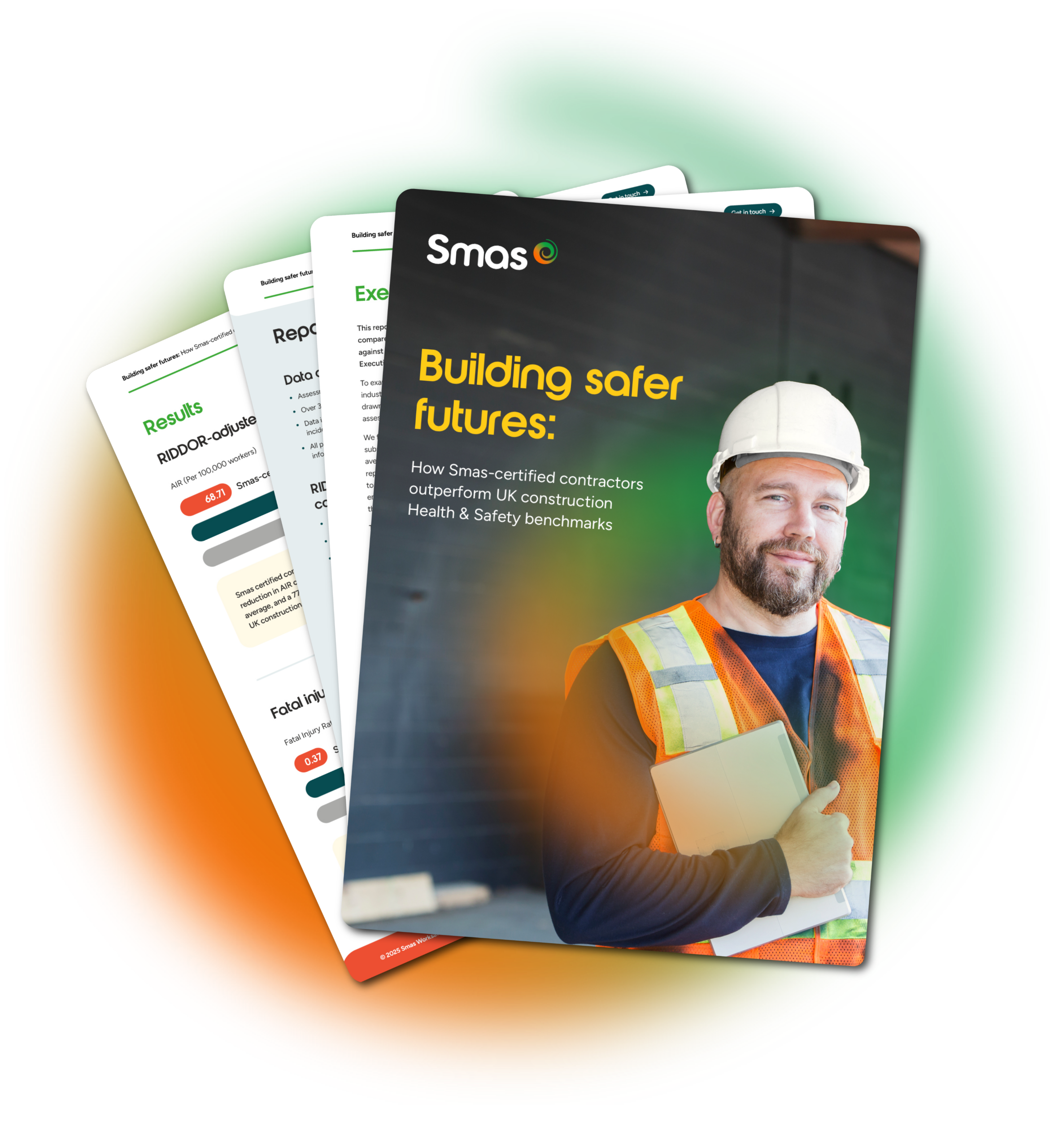
Building safer futures: The Smas Worksafe executive report
The construction industry is a high-risk environment, often reporting the highest rates of injuries or deaths to RIDDOR and the Health and Safety Executive (HSE).
In this executive report, Smas Technical Director, Adam Annetts, compares the Accident Incident Rates (AIR) of Smas-certified contractors against the national HSE and RIDDOR benchmarks.
- Smas-certified contractors demonstrate a significantly better safety performance than the national average
- Small to medium sized businesses experience the most AIR reports, highlighting a need for greater safety assistance
- Smas certification offers major strategic benefits for clients, contractors, and policy makers alike
Simply fill in the form to grab your free copy.


Speak to a Member of the Team
Get in touch to find out how Smas Worksafe could help your business


76.90%
63.10%
77.58%
Our methodology
Data overview
- SSIP assessment records from 2018 to 2024
- Over 35,000 assessments
- Data included workforce numbers, reported incidents (past 3 years) and verified HSE/Local Authority enforcement history
HSE Metrics
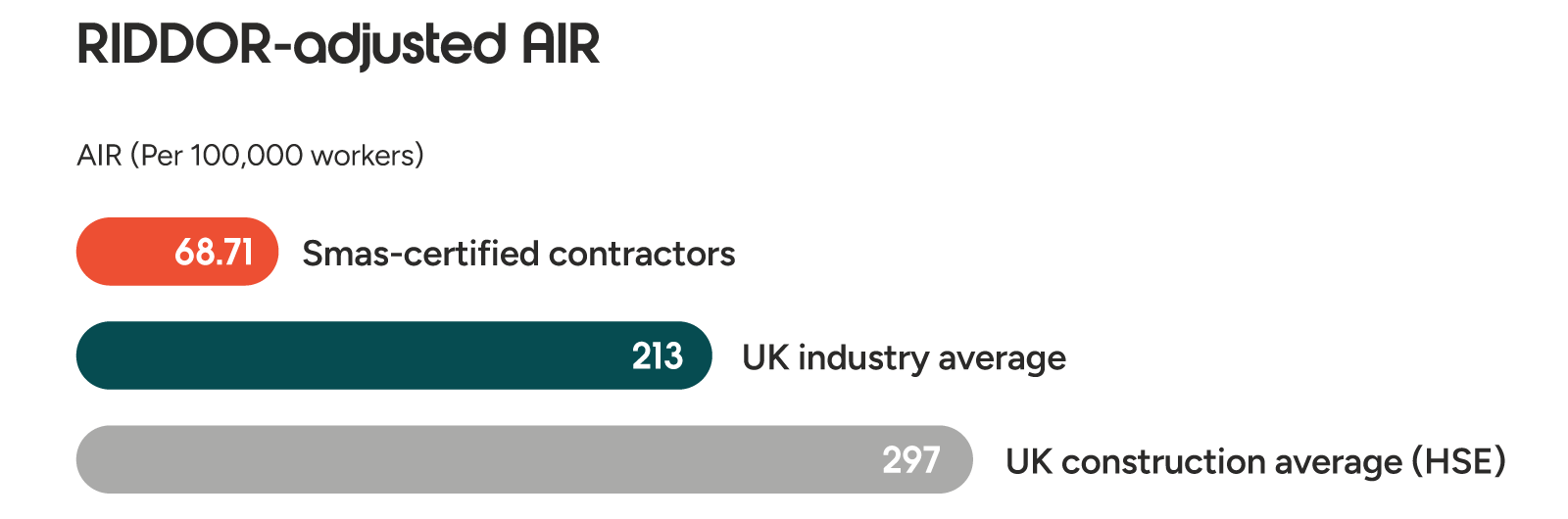
- HSE RIDDOR AIR (all industries): 213 per 100,000 workers
- HSE RIDDOR AIR – Construction: 297 per 100,000 workers
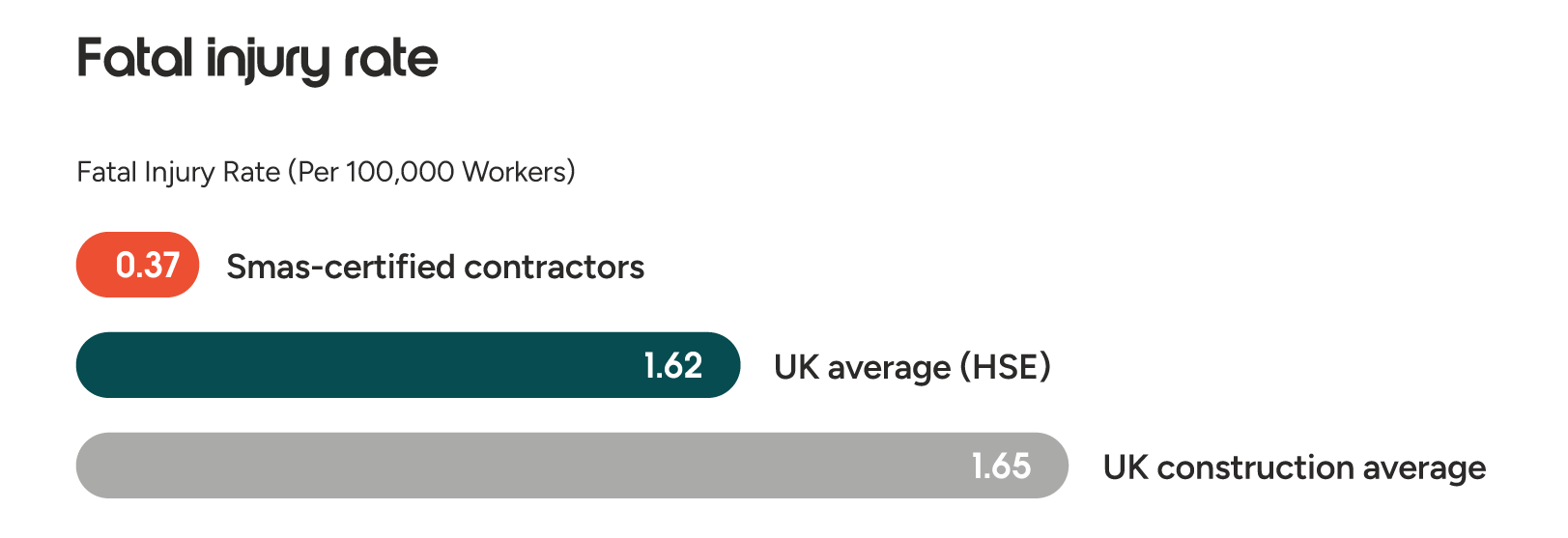
- Fatal injuries (construction): 1.65 per 100,000 workers
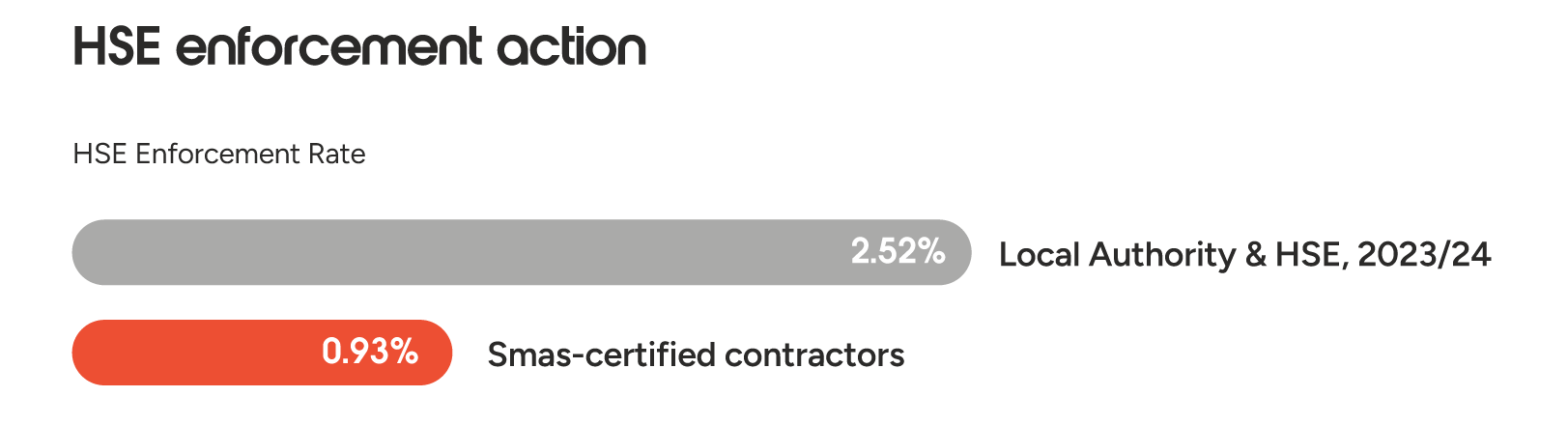
- All enforcement notices (HSE + Local Authority), 2023/24: 9,210 (all industries)

About the Author
Adam Annetts -Technical Director, Smas Worksafe
Adam’s goal is to lead with confidence and knowledge, making modern complex issues digestible by breaking down technical jargon and turning it into clear, actionable insight. He is a Chartered Quality Professional of the CQI, A Chartered Fellow with the CMI, and a Technical Member of IOSH. He has recently achieved an MBA with Distinction from Exeter University, a Post-Graduate diploma with Distinction in strategic leadership and a Dean’s award for exceptional performance.
As the Technical Director for Smas Worksafe, Adam helps contractors across the UK gain nationally recognised certifications. Over the past decade, he has established himself as a thought leader with a deep passion for the intersection of technology, regulation, and behavioural science. He maintains a strong interest in Industry 4.0, digitalisation, and the evolving future of Industry – particularly how intelligent systems, data, and automation can enable safer, more ethical, and higher-performing organisations.

Our results
Strategic Considerations
Smas certification can reduce the risk of hiring non-compliant or unsafe contractors.
Certification is directly correlated with real-world safety performance, and acts as a symbol of operational competence.
Wider adoption of certification schemes can encourage behavioural change, particularly within SMEs.
This report presents robust, data-driven evidence that Smas-certified contractors are achieving significantly better Health & Safety outcomes compared to national benchmarks
Namely, Smas-certified contractors have:
- An Accident Incident Rate that is 76.88% less (68.71/100,000 workers) than the UK construction industry average (297/100,000 workers)
- A fatality rate that is 77.58% lower (0.37/100,000 workers) than the UK construction industry average (1.65/100,000 workers)
- And an HSE enforcement rate that is 63.10% lower than the estimated enforcement rate (0.93% compared to 2.52%)
These findings offer compelling reassurance for clients and principal contractors: partnering with Smas-certified contractors can visibly reduce supply chain risk, improve operational continuity, and demonstrate due diligence in duty-holder roles.
For contractors, the data reinforces that achieving and maintaining Smas certification is beneficial for tendering, and serves as a measurable indicator of safety leadership and organisational maturity.
The message is clear: certification with Smas Worksafe can enhance workforce protection and commercial performance in one of the UK’s most risk-exposed sectors.